Real-time coordination for dispatch and the field.
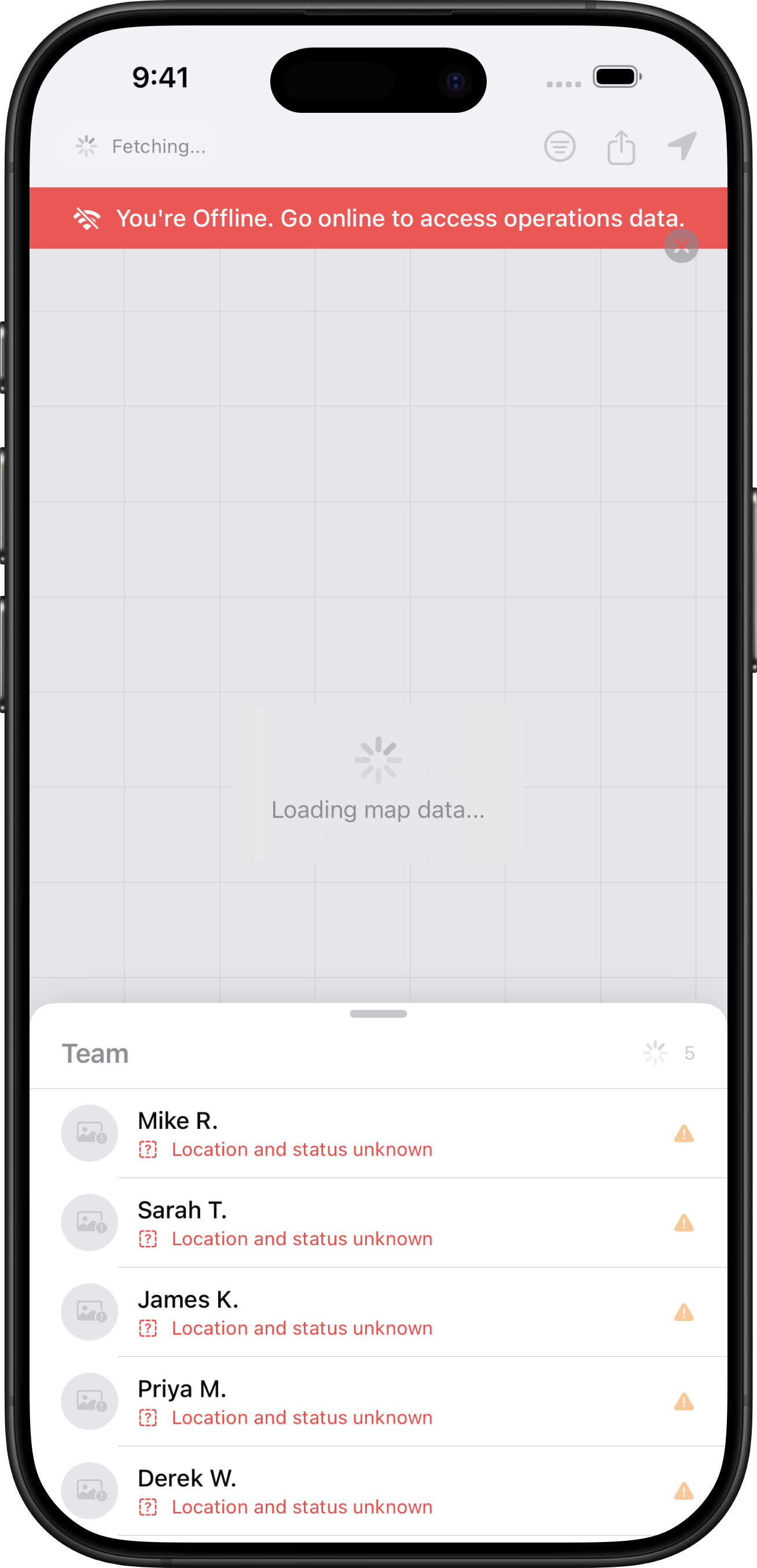
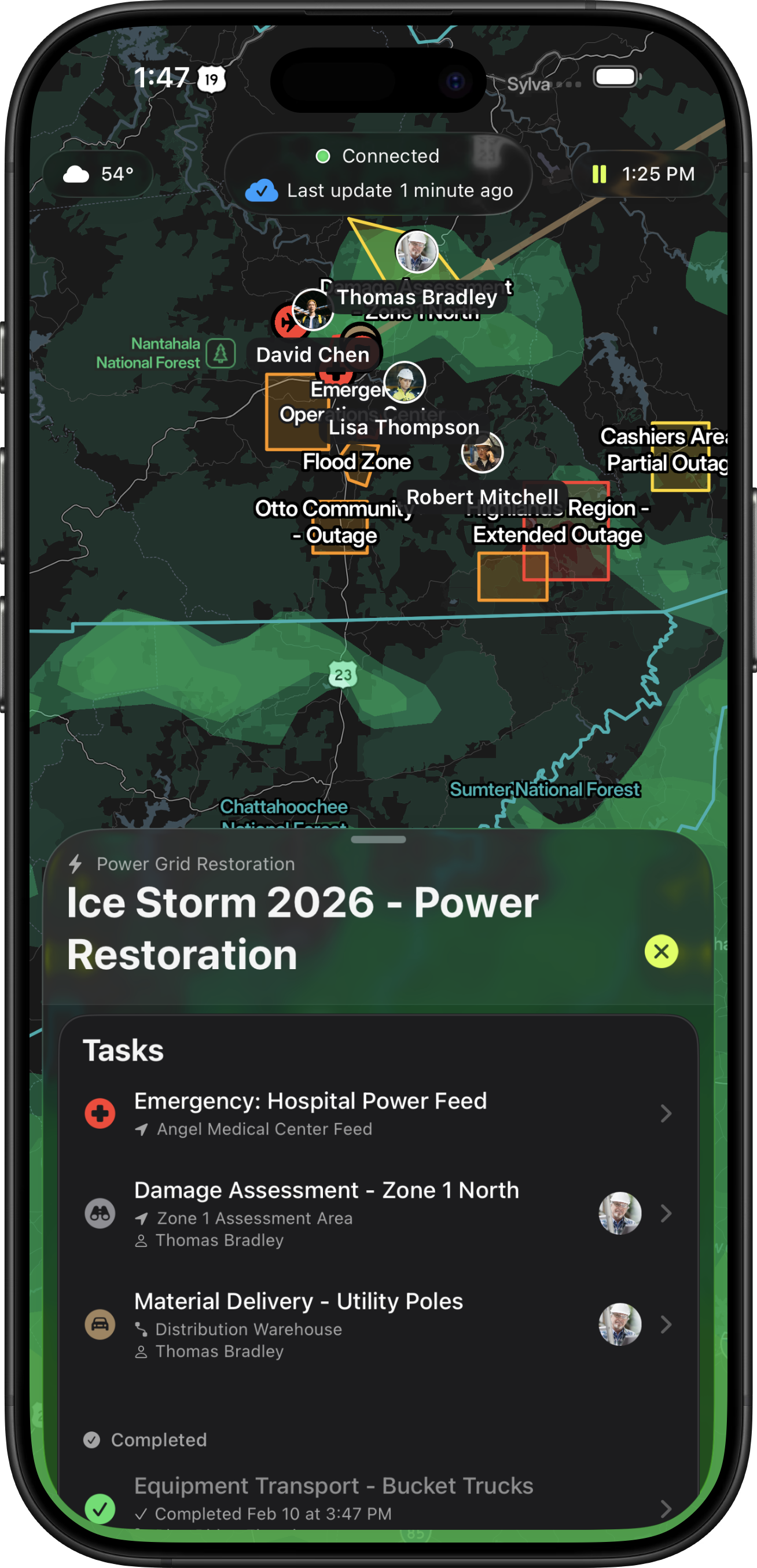
Vector shows crew locations, assignments, and status on everyone's device — whether they're at the EOC using the web interface or on scene with the iOS app. Built to work offline and sync peer-to-peer, so your coordination tools stay up even when cell networks don't.
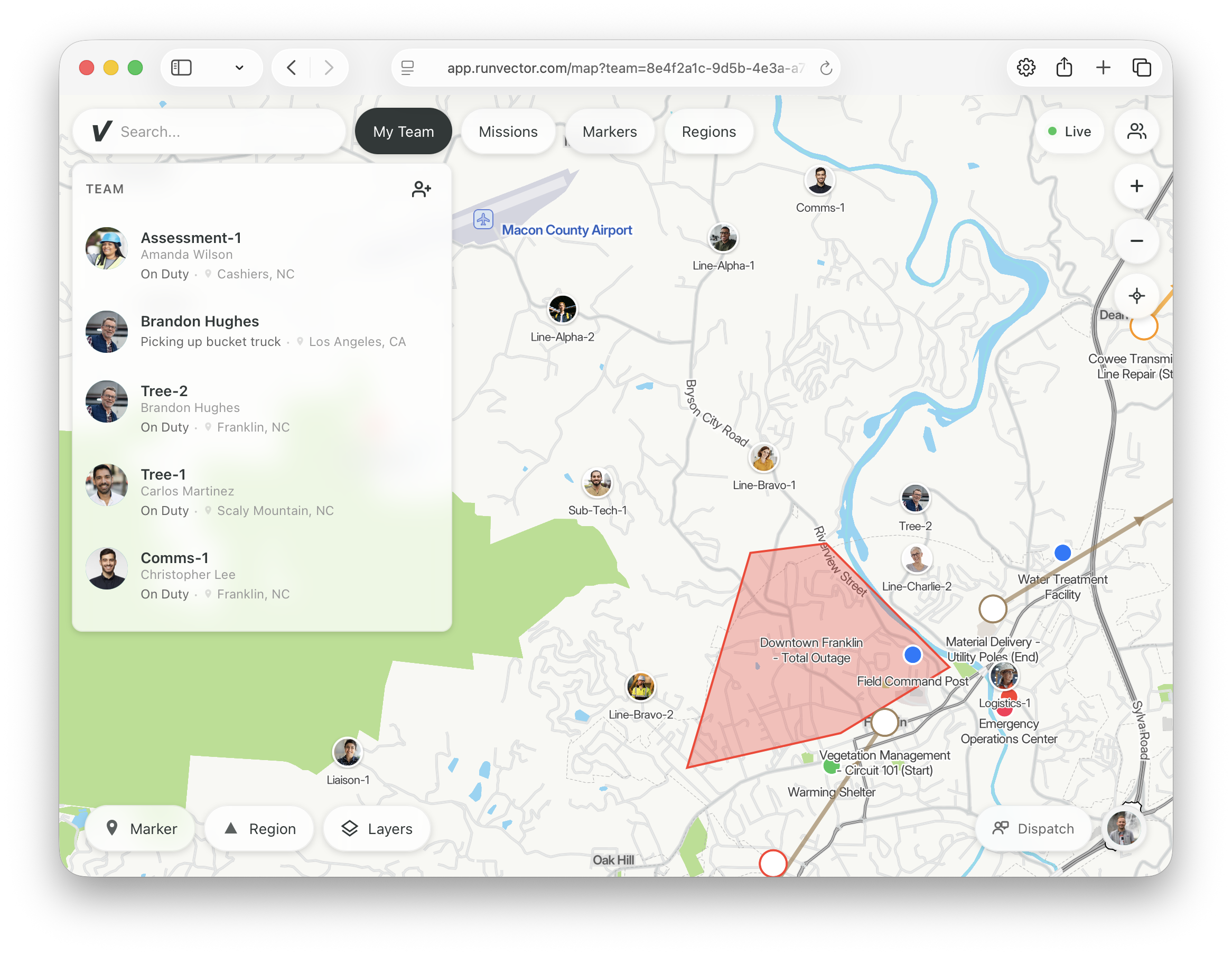
See every responder's location and
what they're working on.
Real-time GPS positioning shows every crewmember's live location and assignment, from the EOC's web dashboard or from the field on iOS. Responders can identify nearby resources, see what's been covered, and coordinate without radio back-and-forth. Accountability data updates automatically across all devices, so when you need to verify a crew is safe or account for everyone on scene, the information is already there. No more tying up the radio or waiting for a manual roll call.
Every vehicle, asset, and resource — tracked and assigned.
Register and track vehicles, equipment, and resources across your operations. Drag-and-drop assignment lets you quickly allocate assets to crews and tasks, and when assignments change, status propagates automatically. Whether it's a generator, a mobile command unit, or a fleet of trucks, you always know where it is and who's using it.
Multi-agency interoperability without the headaches.
When state resources or neighboring counties arrive, they scan a QR code and they're in. No complex accounts, no required training, no manual radio bridging. They see what they need to see, you see where they are, and everyone's working from the same operational picture.
Draw the picture.
Share it instantly.
Define operational regions, safety perimeters, and alert zones directly on the shared map. Tag areas for automatic notifications when personnel enter or exit. View personnel breadcrumbs and historical tracks for post-incident review and accountability. Every annotation syncs to all devices in real time, giving your field teams and the EOC the same tactical picture.
Built for degraded and offline environments.
Vector syncs device-to-device through peer-to-peer mesh networking, so your coordination doesn't depend on cell coverage, cloud servers, or any centralized infrastructure. When crews move into dead zones or network infrastructure is compromised, they still have the complete picture, and their updates propagate to the rest of the team automatically when any device regains a signal.